Much has been written over the motives for Sickingen pursuing a feud with the Cure principality of Trier. Custom states that although he presided over the order he could not win the support of his comrades from the lower aristocracy because he offered them no program of battle or afterward
power division for their consideration and approval by vote. Nevertheless in the late summer of 1522 Sickingen goes to war against Trier with little outside support. One knight wanting to settle matters for himself using the outdated redresses of medieval feudalism in an aspirational struggle for the possession of a Cure principality against those that were growing increasingly powerful at the expense of the knights. That the majority of these very knights did not assist him was a factor both in his inability to defeat Trier, and in the further decline of the knight order's power.
He fails in the siege mainly due to the leadership of the Archbishop of Trier, Richard von Reiffenklau (a long standing comrade that could rely on the entirety of his subjects in the defense), and the knights and advocates of the churches reformation, which alarmingly he had protected and supported. With the failure of the Trier siege, Sickengen was now opposed by a powerful coalition of princes desiring retribution: the Cure prince of Trier, Land Count Philipp von Hessen, and Cure prince Ludwig of the Palatinate.
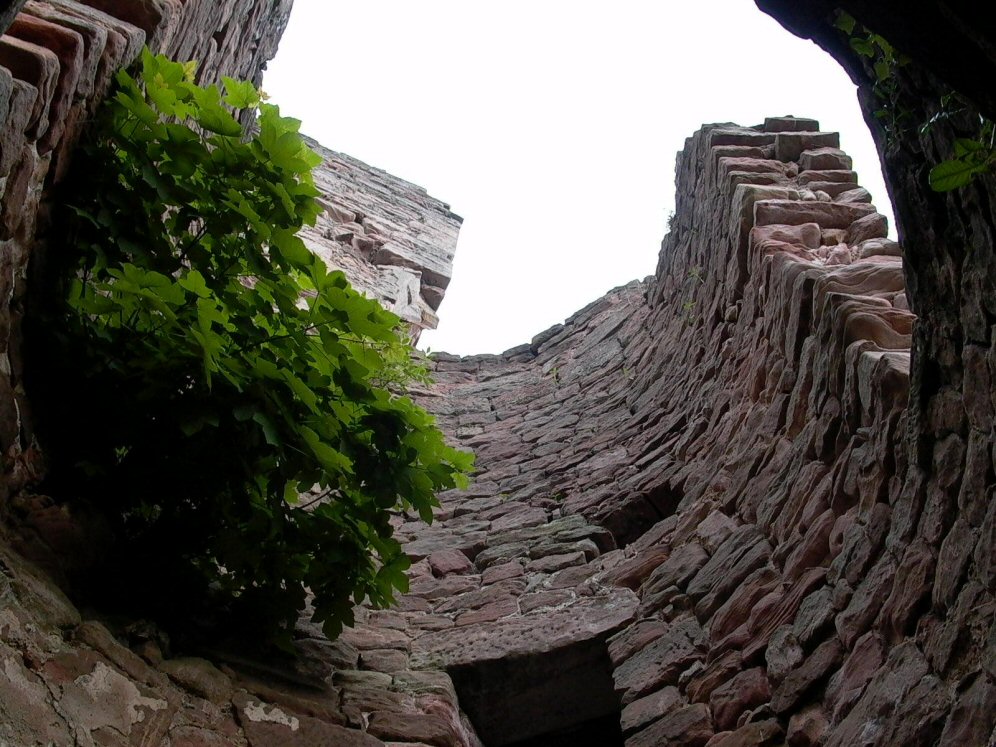
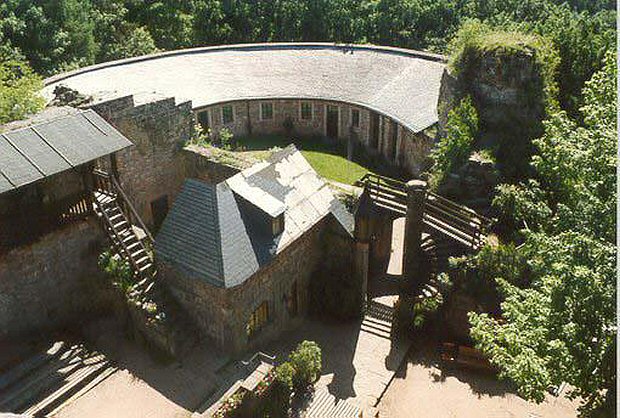
In his last battle with these new nobles of the empire, it becomes apparent how restricted the resources of the once successful knight are against such powerful allied foes. Late April 1523 finds Sickingen defending his cannon castle Nanstein, which is under heavy artillery attack by the coalition of Cure princes. Under the concentrated fire of their modern siege guns, the head bastion (the roundel) of the fort collapses in a few hours. The situation is hopeless. Franz von Sickingen is defeated and on May 7, 1523 dies from wounds he received
during the battle. In result of this war, it was ordered by Cure prince Ludwig that Sickingen's remaining castles (Ebernberg and Hohenberg) and those of the neighboring castle lords that supported him also be destroyed, which act was carried out promptly and can be read about in some of the other Legendary Castles of the Palatinate pages.
Although Sickingen failed, the variety of ways in which his influence has obviously shaped our history remains yet many generations later. From Sickingen to Ebernburg, he is honored with full respect in the remembrance of an ideal from the Middle Ages and designated with the title of the "last knight".
On behalf the Palatinate Counts, Cure Palatine magistrates administered the conquered Nanstein as well as the Sickingen Great and Small Courts of Kaiserslautern. Though knight Franz was defeated for what is termed rebellion, he was nonetheless an honored and accomplished noble who had been of great service to the realm and church. His remaining possessions were not divided among the conquerors, rather, in 1542, the sons of Franz re-acquired Nanstein as a fief from the Palatinate Electors and begin it's refurbishment. The grandson of Empire Knight Franz, Reinhardt von Sickingen, completed this reconstruction in 1595. On site there can be found engravings done during this period by the well known sculptor Matthäus Merian.
The castle also played a role in the Thirty-Year War. In the year 1635 the Imperial General Gallas pulled before the gates of the county seat, Kaiserslautern, and forced
it's defenders to deliver the city and strongholds. Imperial troops then occupied the Sickingen's territory and remain in control until 1643. At this time it was delivered by the Lothringers, who then settled themselves there at Nanstein. This resulted in the castle's doom. Elector Karl Ludwig utterly banished the Lothringers from Nanstein in 1668 with strong force of arms, causing extensive damage. Thus for the second time in it's history, Nanstein is destroyed by cannon fire
Not until the middle of the 19th century was any type of reinforcing restoration or careful excavation done. Further rehabilitations have followed In the 30's of the 20th century and in the recent past.. It is an absolutely fantastic place to visit, and is the host of a popular jazz festival. Many Americans such as myself have seen this castle first hand because of it's location near the large military bases of Kaiserslautern, Ramstein, and Landstuhl.
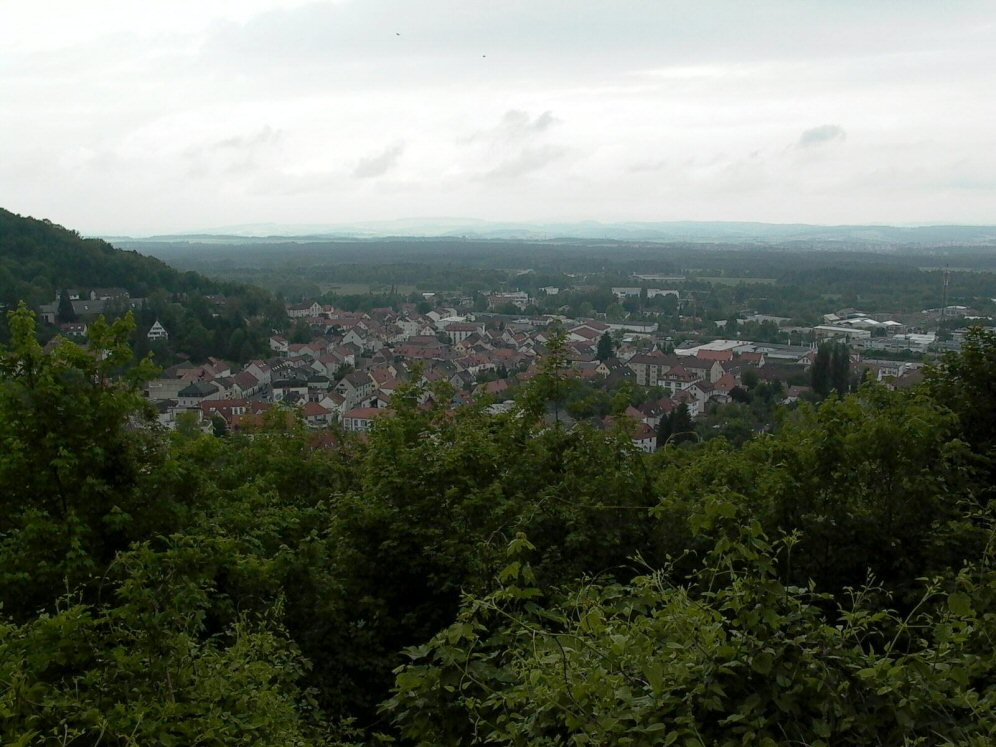
View from the castle