In the time of Kaiser Maximilian I, known as the "last knight Emperor", the many rights and advantages of knights and lesser nobleman were finally lost for good. Since there were now firearms, castles and armaments were only half as valuable. In the Farmer's War, around 1525, many castles were devastated and burned in the Wasgau region. Berwartstein remains, spared probably because of its known impenetrability, perhaps by its reputation and the long held fear of its previous owners. Since the lightning fire, Berwartstein had passed through the hands of these several owners who did little to repair it; The Diocese of Speyer, the Baron von Waldenburg, the family von Dahn and various French families. Thus the castle decayed ever more; over 250 years the bite of time can
destroy much.
A legend surfaces during the time of the von Dahn possession. The castle, which was already in a state of disrepair, is besieged by neighboring attackers. Despite its lively defense and natural impenetrability, the besieging knights manage to climb the rock and penetrate the castle's defenses The Berwartstein knights fall within the castle defending it step by step. The Lady von Dahn and her child were secured within the castle in a hidden cave. The castle was taken, and the attackers set it on fire. As the flames crept ever closer, threatening to consume her in her hiding place, Lady von Dahn took her child and climbed to the heights of the castle. Seeing the fallen, the burning castle, and the attacking horde who had just killed her lord and protectors was more than she could take. Rather than surrender to their mercies she jumped from the heights into the burning ruins with her child. Every year on the anniversary she is said to return to climb the castle once again and repeat her tragically mournful plunge.
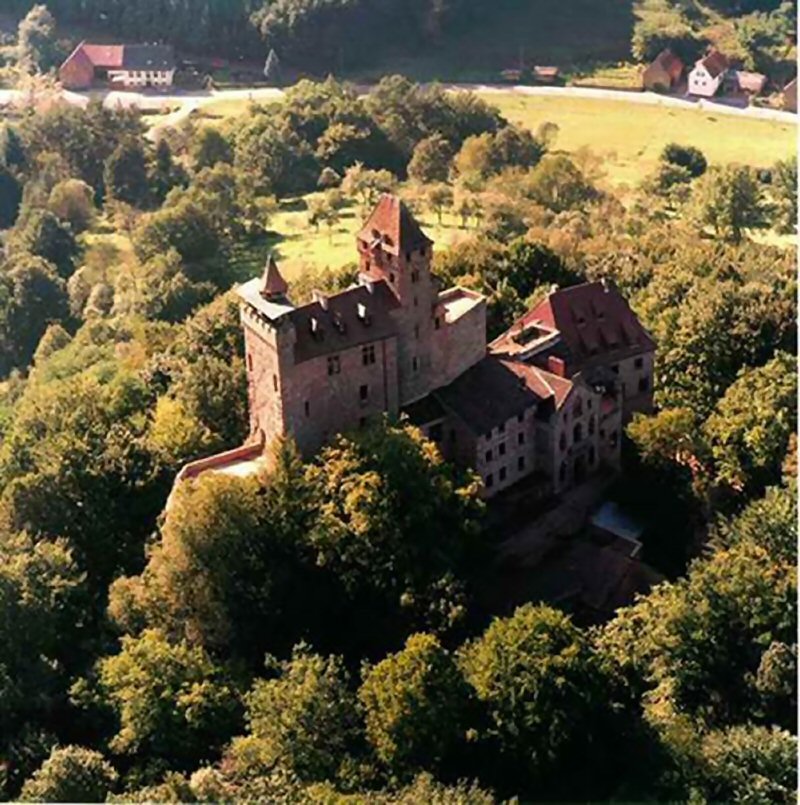
In 1893, Theodor of Bagiensky begins the castle's reconstruction, which allows Berwartstein to again be inhabitable. Occasionally the Second World War breaks in here with bombs and artillery fire over the rebuilt castle, but again it proves itself impregnable, like so many centuries before: When the village of Erlenbach was completely destroyed, it offered safe protection to the inhabitants. The casement and excavated cave vaults withstand the then most modern destruction methods, but the external superstructures of the castle were reduced to a condition which had little prospect for restoration.
The next owner lets it be administered by Alfons Wadle from Erlenbach, who later bought it.. Under the Wadle's care Berwartstein to a large extent achieved the impressive appearance it has today.
It is by the meritorious service of Alfons Wadles that the castle is again able to surprise and inspire so many, a touchable piece of our history. Today the castle can be visited and toured thoroughly. Its
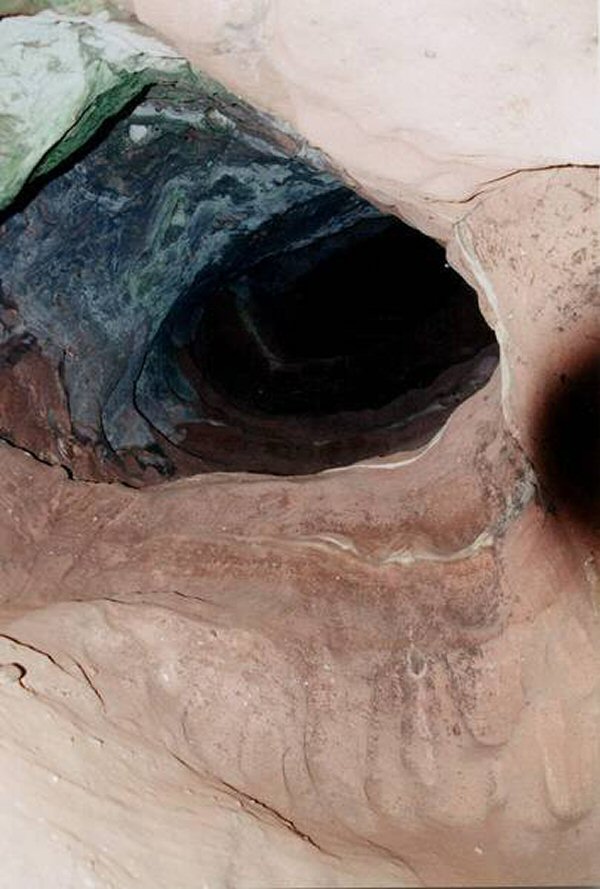
visitors are left with a living picture of an unconquerable castle from former times. The view of the old castle entrance at the southeast side will impress anyone strongly. Red sandstone cliffs, that in former times formed the only entrance, which was to be accessed only by hanging stairs and ladders down a long perforation that runs to the top of the castle rock some 50 meters above the hill it sits on. Further up the castle rock you can see the place where the designers of the 104 meter deep well pit dug into the depths. It takes unbelievably long for a falling stone to impact in the depths. The knight's hall possesses the Trotha coat of arms, a four cross vaulted ceiling, a wall of firm rock, and a large painting of Hans and his men. It is now a restaurant where you can sit and enjoy the communal meal with the spirits of lords from the past in all the ambience of the period. It is connected to the kitchen by a stairway which is cut into the stone.
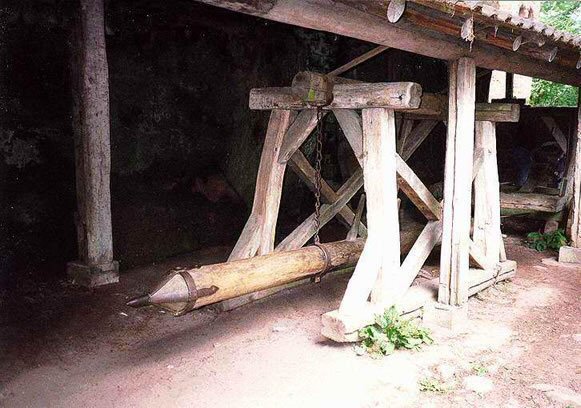
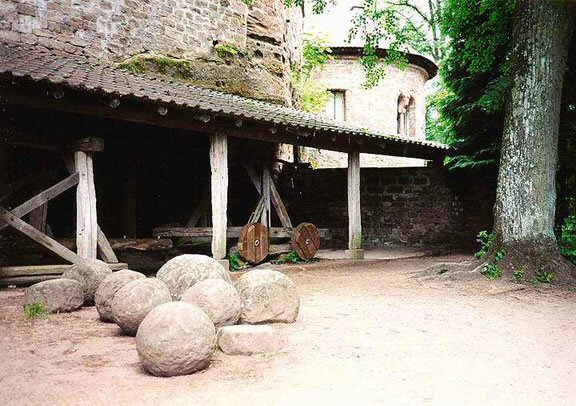
The underground vaults, tunnels and casements are not made of block, but were carved out of the solid rock, a peculiarity which is very rarely to be seen in castles. In the preparation chamber there are old weapons such as a battering ram and the large stone projectiles which
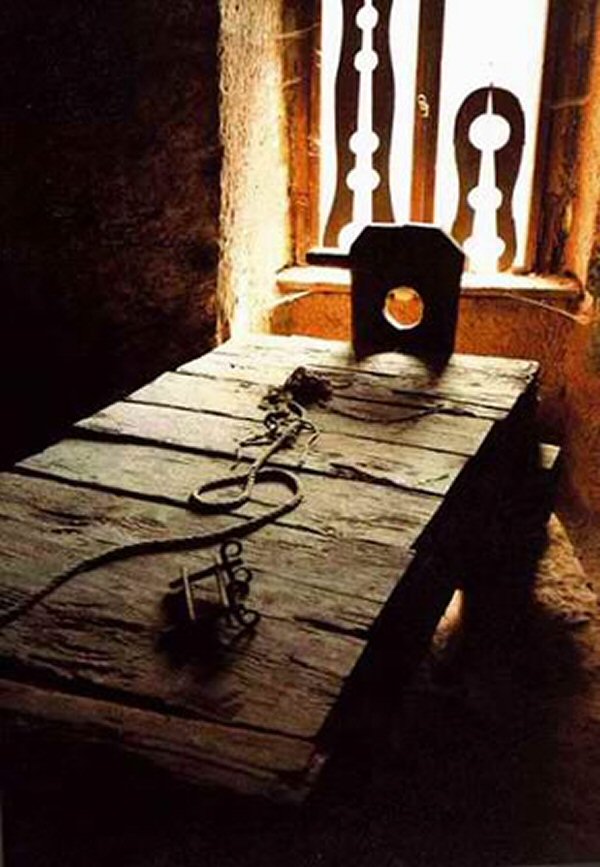
were fired by the catapult, which is there also. Beside the preparation chamber lies the torture chamber, with all kinds of of
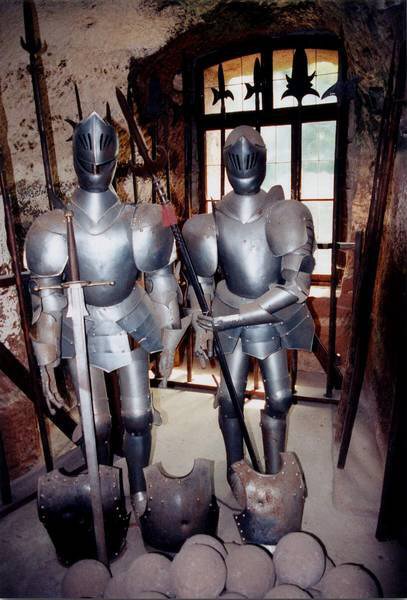
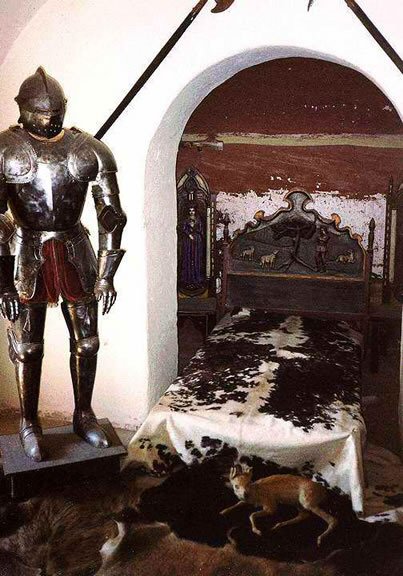
fascinating devices displayed. The old kitchen is also very interesting, and is equipped with an abundance of accessories from that time - pots, jugs, cans, pans and much more. The armory is full of wonderful artifacts and full suits of actual medieval armor. The knights chambers and the chapel are quite elegant in their middle age fashion.
The view from the observation deck out over the beautifully green rolling Felsenland countryside is not something ever to be forgotten. A visit to Berwartstein is a fantastically rewarding experience and one I recommend highly. If by some chance you ever find yourself strolling its grounds be sure to give my regards to the Wadles, salute the grave of Hans von Trapp and be clear of the area by nightfall.....